France has a new answer to mass protest, and it comes with an agenda and a conference room.
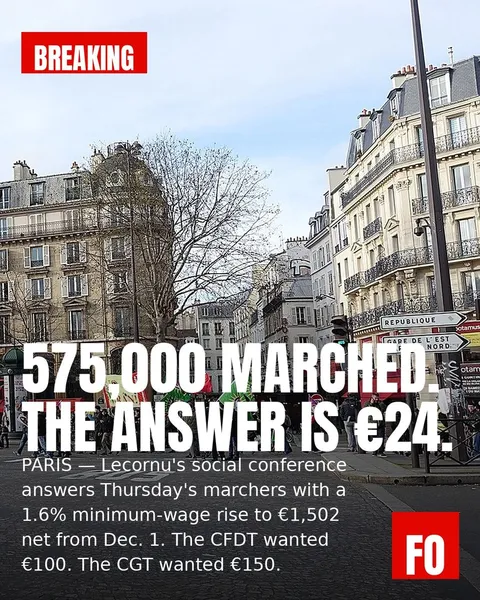
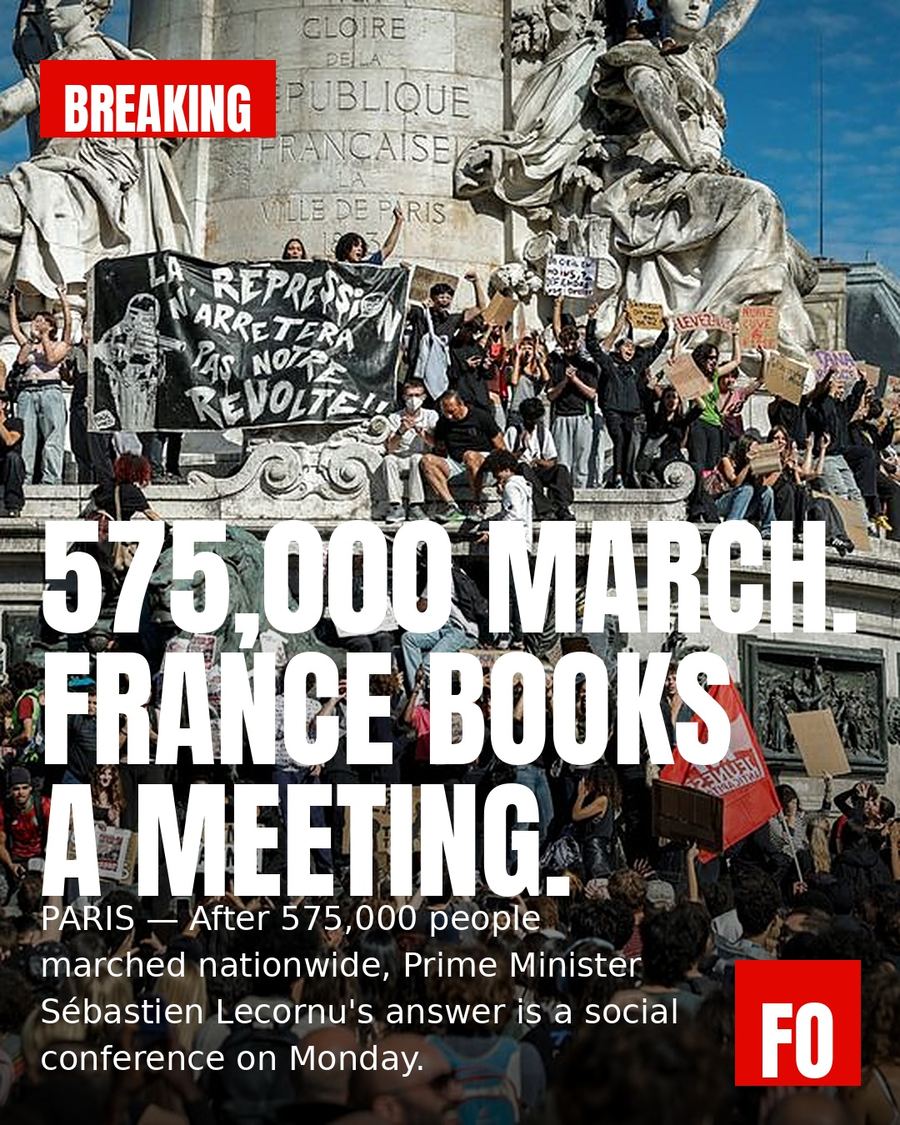
On Thursday, November 5, nationwide marches over wages and the cost of living drew 575,000 people by the Interior Ministry's count — the unions, who organized the day, put the figure at nearly 1.6 million. Either way, it was the biggest single day of protests since the unrest began in September, with 193 marches across the country and 55,000 people in Paris alone. Police detained 448 people as clashes broke out in a handful of cities.
The marches came a day after the National Assembly rejected the revenue section of the government's 2027 budget by 458 votes to none, sending the text to the Senate. The unions' demands are not subtle: the CGT wants the minimum wage raised 10 percent immediately, and the CFDT wants an extra 100 euros a month in take-home pay. The government's budget, meanwhile, is built around tens of billions in savings.
So what did Prime Minister Sébastien Lecornu do with all of that? He announced a social conference. On Monday, November 9, at Matignon, unions and employers will sit down together to discuss purchasing power and wages. No wage increase has been committed to. The labour minister has been told to finish his preliminary consultations by Sunday, which is the bureaucratic equivalent of "we'll circle back."
Like your satire sourced?
Get the Dispatch — the week's sharpest offenses, with receipts attached.
To be fair, a meeting is technically a response. It is also what you schedule when you have run out of responses. The marchers spent a Thursday in the streets; the government spent it booking a Monday. Somewhere in Paris, a calendar invite is doing the heavy lifting that a pay raise was supposed to do.
The underlying reporting is filed in the Evidence Locker: Le Monde (Nov. 6, 2026); CNN (Nov. 5, 2026).