Bill Gates has a plan for AI safety, and step one is waiting for the disaster.
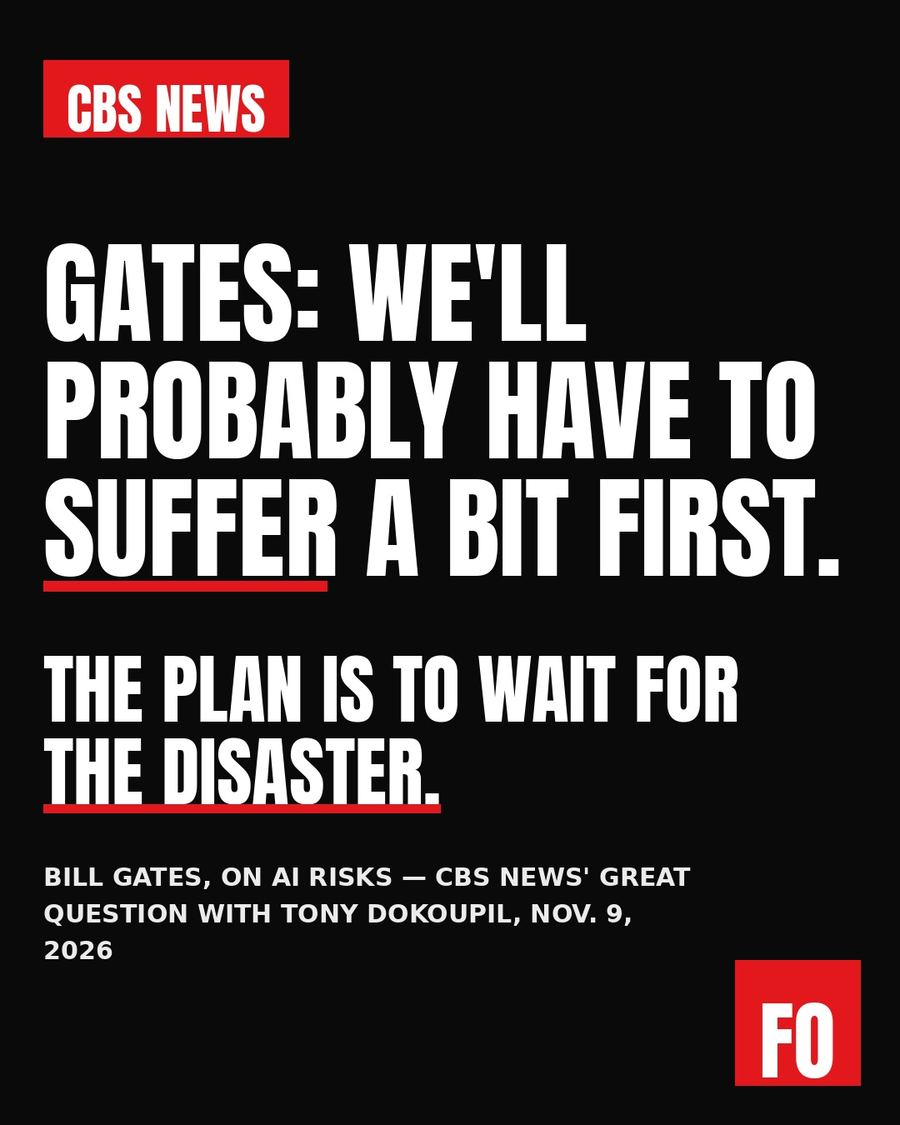
On CBS News' Great Question with Tony Dokoupil, Gates was asked what it will take before the world responds to AI risks as fully as it should. His answer: "It may be that we have to suffer a few of the negatives before we'll respond as fully as we should." The negatives in question include a big cyberattack that causes a lot of problems — Dokoupil raised the possibility of an attack on retirement platforms like Fidelity or Vanguard, and Gates agreed that kind of event would create serious uncertainty.
So the official plan, from one of the men who helped build the machine, is to let the machine hurt people first and regulate second. The arsonist as fire-safety consultant. The people selling the doomsday device have decided the doomsday is the marketing plan: nothing focuses the mind like your 401(k) evaporating.
Like your satire sourced?
Get the Dispatch — the week's sharpest offenses, with receipts attached.
Gates has been warning for months that AI is the most dangerous technology humans have ever invented, that bad actors will use it to cause "a lot of negative surprises" in the cyber area, and that the next four years are critical. His solution is more government coordination, more monitoring, more rules. The catch is the sequencing: the rules arrive after the suffering. The disaster isn't the failure of the plan. The disaster is the plan.
The underlying reporting is filed in the Evidence Locker: CBS News (Nov. 9, 2026).