California mailed the ballots. The Court said count them. The whole dispute, from filing to one-line denial, took hours.
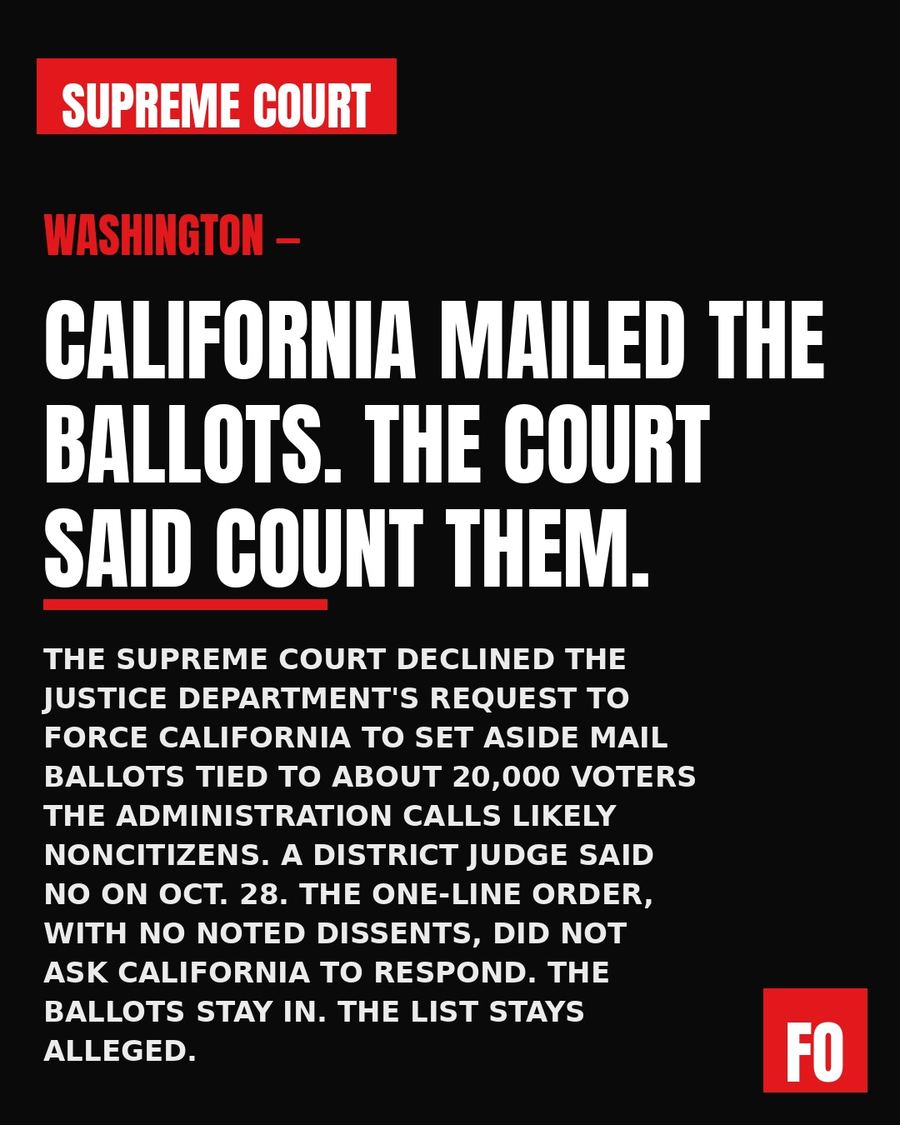
On Monday, November 2, the Supreme Court declined the Justice Department's emergency request to force California to set aside mail ballots tied to about 20,000 registered voters the administration calls likely noncitizens. The order was one sentence, unsigned, with no noted dissents, and the Court did not even ask California to respond before ruling. A district judge had already said no on October 28, and a divided appeals panel had said no on Friday. The emergency request was, by that point, the fourth no in a week.
Note the careful wording, because the wording is the story. The 20,000 figure is the administration's list and the administration's claim. California mails ballots to its registered voters; the Justice Department says about 20,000 people on its list are likely not citizens; the courts, from the district judge up, declined to pull those ballots out of the count on the eve of the election. The ballots stay in. The list stays alleged. The underlying lawsuit continues, but the emergency is over, and it ended the way emergencies usually end when they arrive the day before an election: quickly, quietly, and in one sentence.
Like your satire sourced?
Get the Dispatch — the week's sharpest offenses, with receipts attached.
California's ballot machine did not need the Court's permission to keep counting. It just needed the Court not to stop it. The Court obliged, without asking California a single question first.
The underlying reporting is filed in the Evidence Locker: USA Today (Nov. 2, 2026); CNN (Nov. 2, 2026).