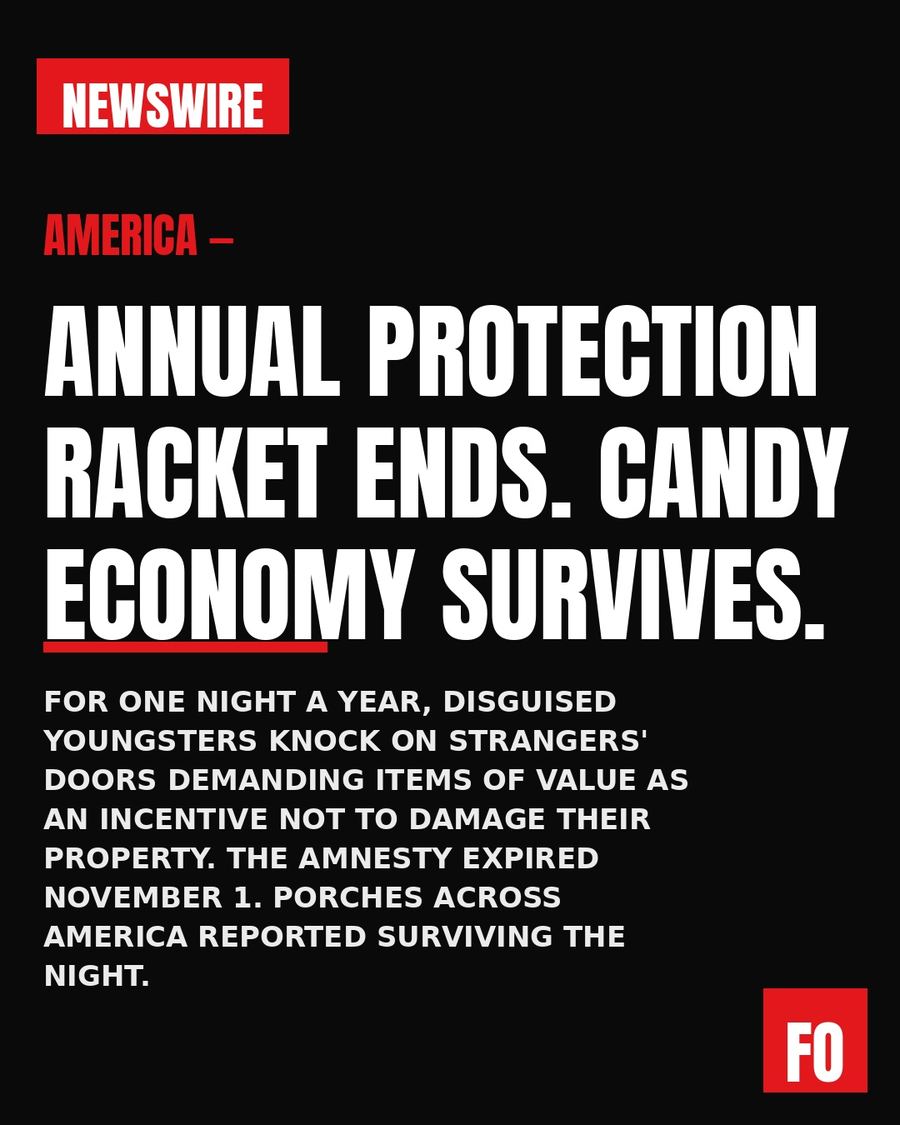
The annual protection racket has ended, and the candy economy survived.
For one night a year, the rules of normal commerce are suspended in every neighborhood in America. Disguised youngsters knock on strangers' doors and demand items of value. The implied terms are clear to everyone involved: hand over the treats, and your property will not be damaged. Refuse, and find out what "trick" means.
This is not an exaggeration invented for the joke. It is the literal description of the custom, and the custom's own history agrees. Newspaper accounts from the 1930s describe youngsters offering "protection against window soaping" in return for treats, and one 1939 account called the whole arrangement a slogan by which pranksters "successfully extracted candy and fruit" from residents. The protection framing is not our invention. It is the original business model.
The amnesty expired November 1. The costumes are back in the closet, the porch lights are off, and the economy of fun-size chocolate bars has closed its books for another year. Homeowners across America reported surviving the night, though several admitted to pre-paying their protection in bulk from warehouse stores, and one neighborhood was seen panic-buying king-size bars at 6 p.m. in what economists are calling a classic protection-market surge.
Like your satire sourced?
Get the Dispatch — the week's sharpest offenses, with receipts attached.
Nobody was harmed, which is the remarkable part. A racket that runs openly, in costume, in front of parents, with the full cooperation of its victims, and closes on schedule without a single arrest. The youngsters got their tribute. The homeowners kept their windows. The candy moved from warehouses to pillowcases to stomachs in under four hours, a supply chain performance most logistics companies would envy.
Next year it starts again, same terms, same night, same deal. Pay the kids. Keep the porch. Everybody understands the arrangement, and everybody pretends it is adorable.
It is adorable. That is what makes it a perfect racket.
The underlying reporting is filed in the Evidence Locker: Samira Kawash, "Gangsters, Pranksters, and the Invention of Trick-or-Treating" (Museum of Play).