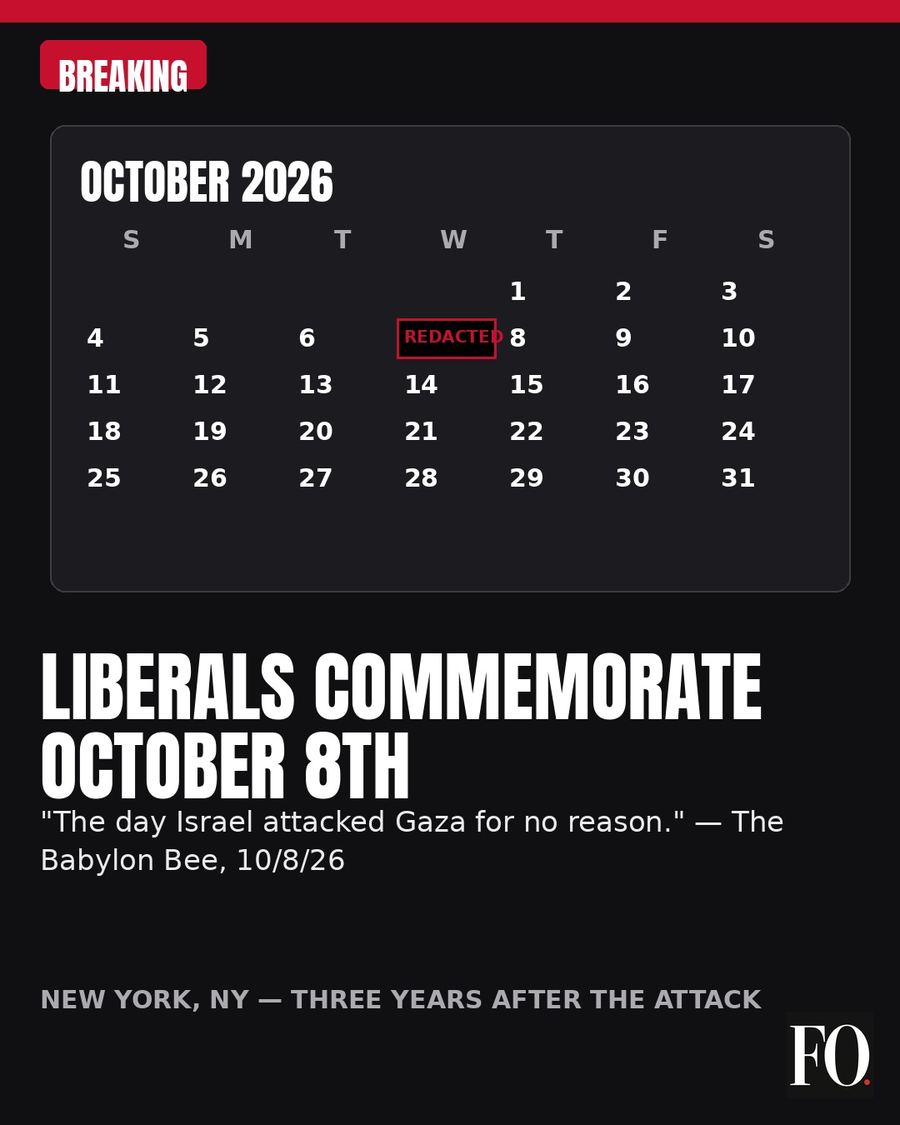
On October 8, 2026 — the day after the third anniversary of the October 7 attacks — the Babylon Bee published a piece headlined "Liberals Commemorate October 8th, The Day Israel Attacked Gaza For No Reason." The bit: activists solemnly marking the anniversary of the day Israel "attacked Gaza completely unprovoked," holding moments of silence for the victims of a war that, in their telling, began on the 8th, for no reason, out of nothing but spite (Artful Dilettante mirror).
The joke works because the inversion is real. Start the timeline on October 8th and the entire moral geometry of the story flips: the victim and the aggressor swap seats. Start it on October 7th and they don't.
So here are the receipts for October 7, 2023. Hamas attacked Israel that morning — by land, sea, and air — killing more than 1,160 people, the vast majority civilians. At the Nova music festival alone, 364 people were killed. The Dispatch's fact-check of the day's competing claims confirms the core numbers: nearly all of the Israelis who died that day were killed by Hamas, not by friendly fire (The Dispatch).
Like your satire sourced?
Get the Dispatch — the week's sharpest offenses, with receipts attached.
This is the timeline test the carousel proposes: does your history lesson start before or after the attack? A commemoration that begins on the 8th has redacted the 7th — not as an editorial choice but as the entire premise. The calendar gag is the argument in one image: October 7th, blacked out, labeled REDACTED.
None of this is a claim about everything that followed. It is a claim about chronology, which is the one thing a timeline cannot negotiate. Causes precede effects. The 8th came after the 7th. File it in the Evidence Locker under Chronology — and the next time someone starts the story mid-book, check which page they tore out.