Every consent form is a bet. For years, the bet parents were sold on GnRH agonists — the drug class everyone calls puberty blockers — was simple: give your child these drugs, or risk losing them. The suicide-prevention pitch was the entire closing argument.
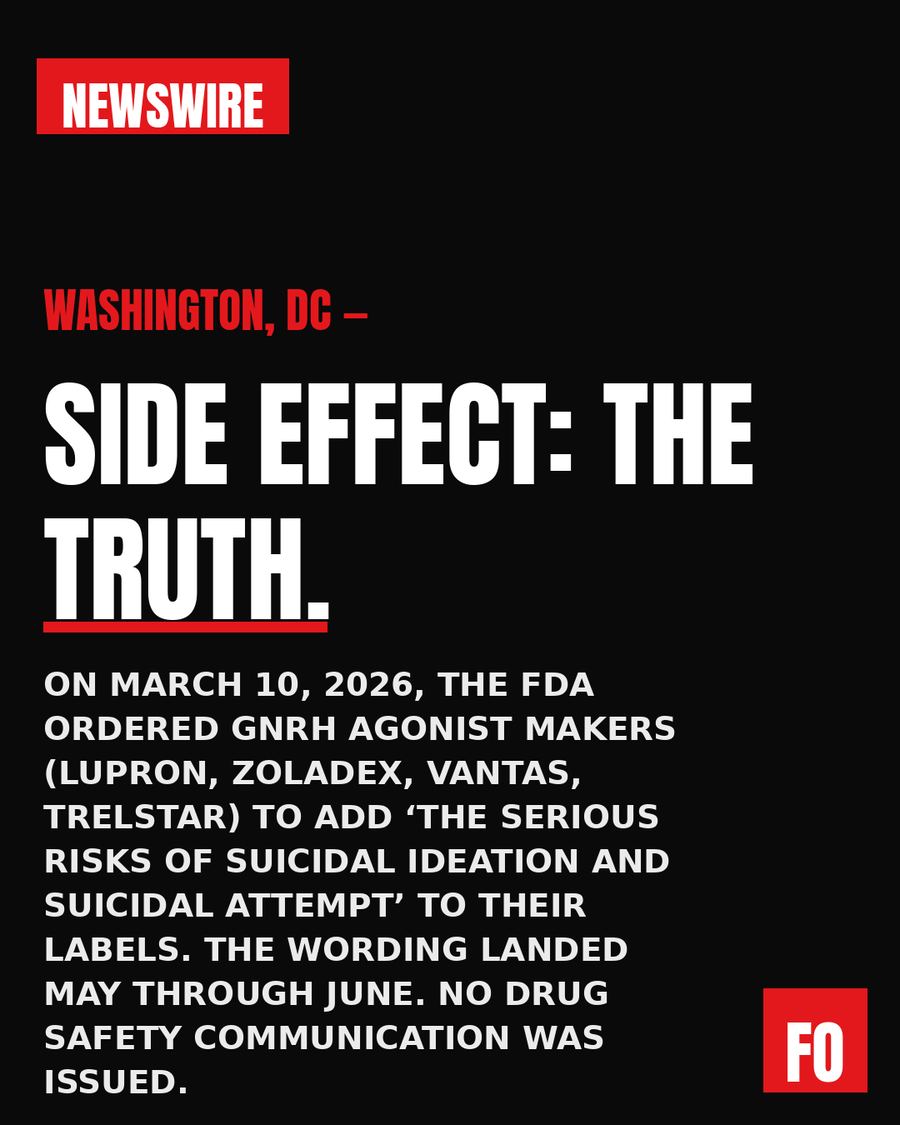
On March 10, 2026, the Food and Drug Administration quietly folded that argument. In a letter to the makers of every GnRH agonist — Lupron, Zoladex, Vantas, Trelstar — the FDA invoked section 505(o)(4) of the federal drug law, the provision that lets it order a label change when it finds new safety information. The agency's own words for the new information: it "pertains to the serious risks of suicidal ideation and suicidal attempt." Not "talk to your doctor." Suicidal ideation and suicidal attempt. The serious risks of them. On the label.
The manufacturers complied. Lupron's revised label, approved May 6, 2026, now lists under postmarketing experience: "Psychiatric disorders – Suicidal ideation and attempt." Zoladex and Vantas followed the same day; Trelstar, adding "depression, suicidal ideation and attempt," on June 26. And here is the detail that makes the wire copy write itself: leuprolide, triptorelin and histrelin are the same molecules sold for children as Lupron Depot-Ped, Fensolvi, Triptodur and Supprelin LA — names that will mean nothing to a parent reading a form at a clinic desk. No GnRH agonist is FDA-approved to treat gender dysphoria, which makes the pediatric use off-label and the paperwork the whole game.
Here is the part that would be funnier if it were a joke: the FDA issued no Drug Safety Communication about any of this. Its archive for 2026 lists alerts for Kybella, an over-the-counter weight-loss drug, even vitamin B6 — nothing for the suicide-risk labeling on GnRH agonists. No press release. The labels just changed. Quietly.
Like your satire sourced?
Get the Dispatch — the week's sharpest offenses, with receipts attached.
It is worth noting the agency already knew. Internal FDA emails from January 2022, released through a records request, describe the agency's 2016–2017 review of children on these drugs, in which an FDA clinical team leader wrote: "We did find increased risk of depression and suicidality, as well as increased seizure risk and we issued SLCs to the entire class for these AEs." That was four years before the order. The adult labels caught up this spring. The punchline of a decade of assurances is now printed, in black and white, on the paperwork itself.
Read the fine print, they say. For once, the fine print read the room.
The underlying reporting is filed in the Evidence Locker: Billboard Chris (2026-10-18); FDA Lupron label, accessdata.fda.gov (2026); FDA Drug Safety Communications archive (2026).