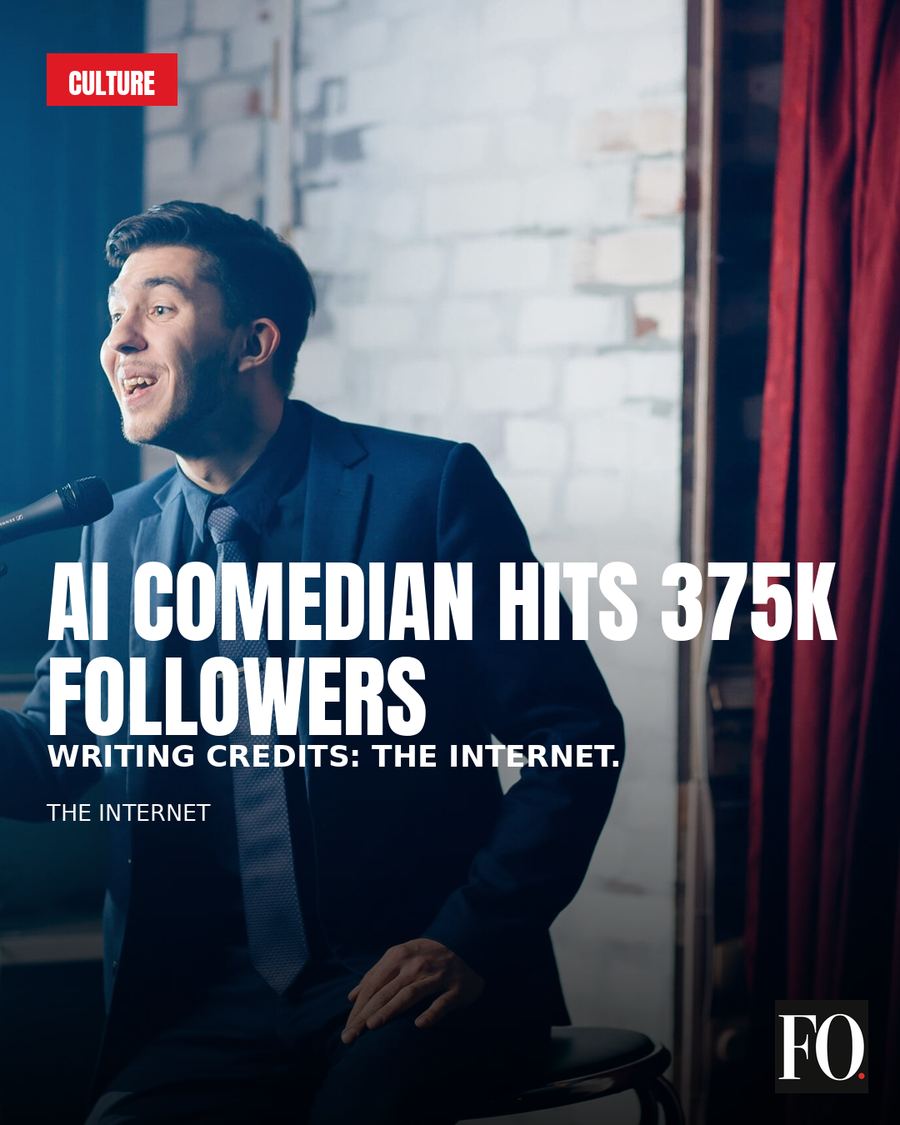
There is a comedian on Instagram with 375,000 followers, 75 videos, and one clip past 7 million views. She does not exist. Her name is Tiffany Sloan, she is AI-generated, and the jokes, according to the human comedians who wrote them, are stolen.
The account started posting on Sept. 11. Barely three weeks later it had passed 375K followers, posting roughly 25 videos a week, most of them featuring the synthetic performer doing stand-up in front of a fabricated audience. Then, on Oct. 3, comedian George Brett Olson posted a side-by-side comparison: one of Sloan's bits matched against his own performance, down to a similar outfit. Olson says other comedians have had material lifted as well, and that the same operation may be running the same stolen jokes through different AI-generated performers. The creator behind the account is unknown. Meta has not responded to the allegations.
Sit with the economics for a moment, because the economics are the story. A stand-up set takes months of writing and stage time to refine: open mics, dead rooms, reworked tags, the slow alchemy of finding what lands. A Sloan video takes minutes, and the account can A/B test punchlines the way an advertiser tests thumbnails. The same joke can be regenerated with different clothing and different synthetic performers to see which version the algorithm rewards. Sloan has even been dropped into clips alongside famous actors, and there is an OnlyFans account attached to the character, because of course there is. One observer called the whole setup a marketing hack. The comedians whose material is allegedly in the act have a shorter word for it.
This is the part where the usual AI discourse reaches for the word "disruption," and the comedians reach for a different vocabulary. The industry's oldest sin is joke theft; the new version just industrializes it. A human joke thief had to at least memorize the bit and stand on a stage. The machine version skips the stage, the memorization, and the human, and keeps the audience. The audience, it turns out, does not care whether the performer exists. The algorithm certainly doesn't. Seven million views is seven million views, and the engagement monetizes the same either way.
Like your satire sourced?
Get the Dispatch — the week's sharpest offenses, with receipts attached.
There is also a quieter casualty here, and it's the open-mic ecosystem the thieves are strip-mining. Working comics post their sets online to build an audience; the Sloan operation allegedly treats those posts as a content library. The incentive structure now punishes the exact behavior the platform rewards: post your material, watch a synthetic performer do it better, to a bigger audience, faster. The machine doesn't write material. It acquires new authors, and the authors get nothing, not even the followers.
What happens next is genuinely unclear. The platform's rules around synthetic performers exist but are built for a different problem. Nothing in Sloan's bio indicates the sets are AI-generated or taken from real comedians. The comics can post side-by-sides; the account can keep posting. In the attention economy, the thief with the better posting schedule wins, and the machine never sleeps, never bombs, and never has to look a fellow comic in the eye.
The punchline writes itself, which is fitting, because these days the punchline writes everyone.
The underlying reporting is filed in the Evidence Locker: Kotaku's coverage of the Tiffany Sloan account and Olson's Oct. 3 comparison (Oct. 5); The Daily Game News (Oct. 6); The Outpost's reporting on the monetization pipeline.