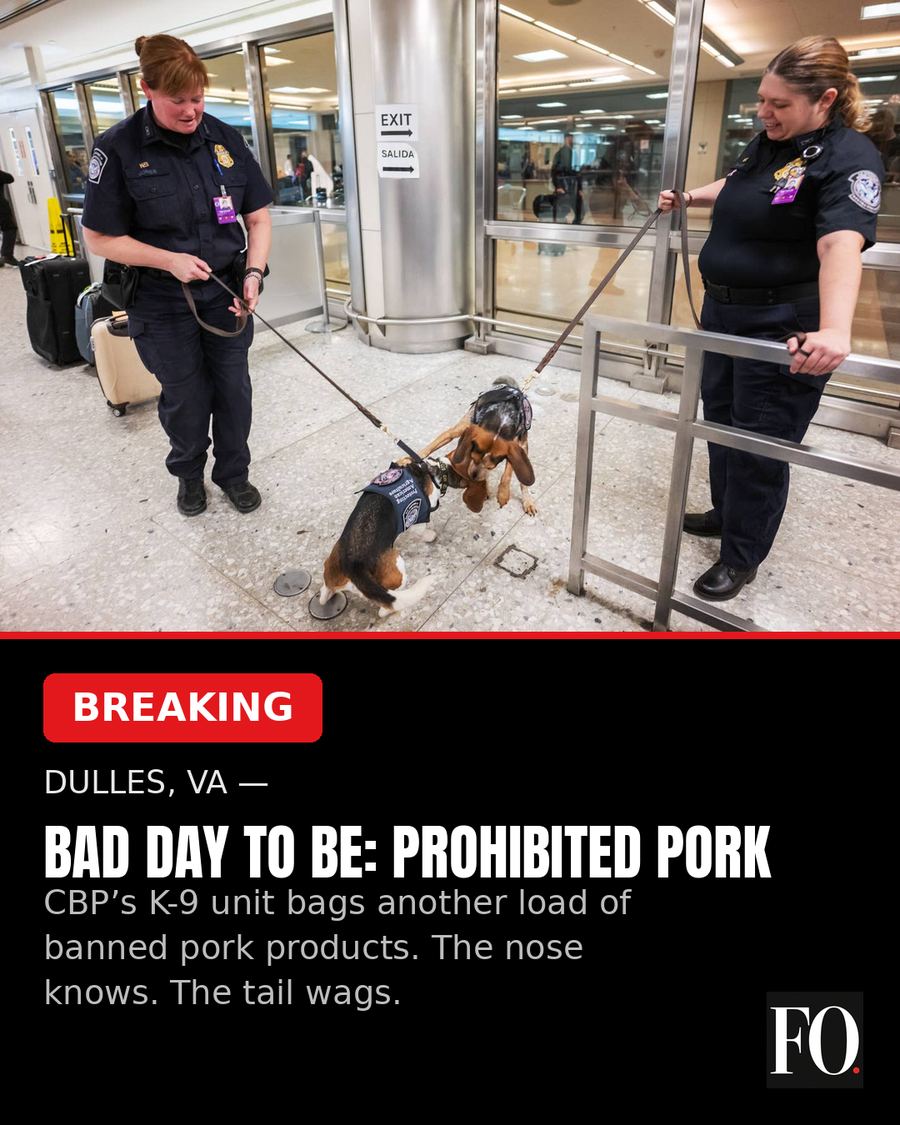
The one federal agency that truly understands social media runs on four legs.
U.S. Customs and Border Protection's agriculture detector dogs — the famous Beagle Brigade and its K-9 colleagues — are the front line against one of the least glamorous threats to the American economy: smuggled pork. On a typical day, CBP agriculture specialists across the nation seize 4,691 prohibited plant, meat, animal byproduct, and soil items and intercept 222 insect pests at U.S. ports of entry. A trained agriculture detector dog can scan a piece of luggage for smuggled fruit or forgotten meat in seconds. The nose knows.
The case files read like a true-crime series for the charcuterie set. CBP agriculture detector K9 Potter alerted on the baggage of two travelers arriving at Philadelphia International Airport from Albania; the secondary inspection turned up 6.2 kilograms of raw unknown meat, pork hot dogs, and raw ruminant tripe, plus fresh leeks and chestnuts hiding two live insects — a chestnut tortrix moth and a nut weevil. The travelers were released to continue their visit. The hot dogs were not.
In El Paso, agriculture specialists at the Bridge of the Americas seized 14 rolls of Mexican bologna — 154 pounds — hidden behind the rear seat of a Chevrolet pickup. Bologna is a prohibited product because it's made from pork and can introduce foreign animal diseases to the U.S. pork industry. The driver claimed the red rolls were frozen turkey ham. The rolls were, in fact, bologna. The bologna was destroyed.
Like your satire sourced?
Get the Dispatch — the week's sharpest offenses, with receipts attached.
At Dulles, K9 Valen of the Beagle Brigade intercepted prohibited pork and ruminant meat products from travelers arriving from Tunisia, a country dealing with lumpy skin disease, epizootic hemorrhagic disease, and bovine tuberculosis. "These products may seem harmless," said Area Port Director Christine Waugh, "but the introduction of animal diseases could cripple our nation's livestock industries."
The stakes are real and enormous. Chinese pork is banned outright because of African Swine Fever — a disease harmless to humans but deadly to pigs, with no vaccine or cure, that can survive in meat for months and could cause billions in economic damage if it reached American herds. In one of the largest agricultural seizures in U.S. history, CBP intercepted a million pounds of illegally smuggled Chinese pork hidden in 50 shipping containers at Port Newark-Elizabeth.
So yes: bad day to be a prohibited pork product. The K-9 unit doesn't do press conferences. It does purr-fect enforcement with a wagging tail, and it is — by every available metric — the best-run account in the federal government.
Sources: U.S. Customs and Border Protection, "Dulles CBP seizes prohibited pork, ruminant meat products" (cbp.gov); National Hog Farmer, "CBP K9 sniffs out 14 pounds of prohibited food products" and "CBP seizes 154 pounds of bologna at El Paso port of entry" (CBP releases). Evidence Locker entry: meme-cbp-k9-pupdates (dormant until post goes live).