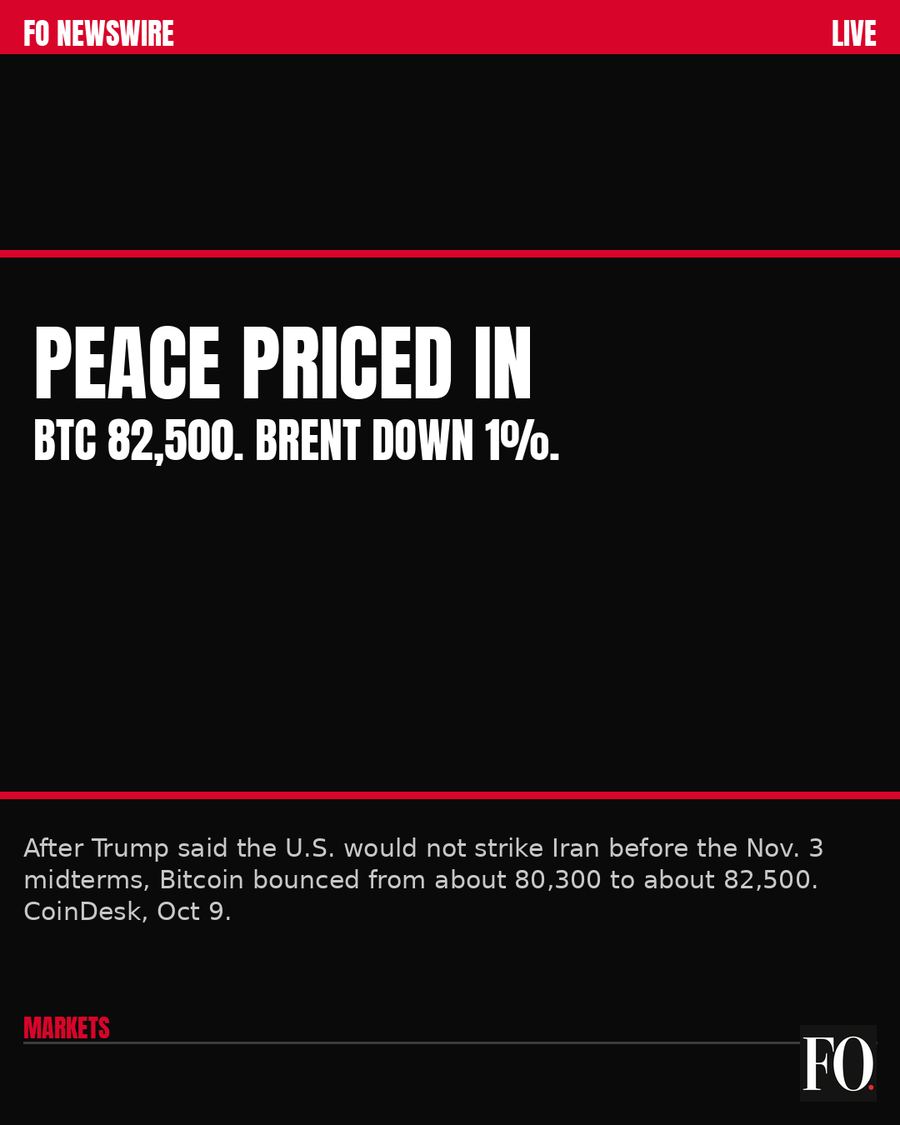
On Thursday, October 8, President Trump posted on Truth Social that the United States would not attack Iran before the midterm elections on November 3, describing talks with Iran as productive while keeping the embargo in full force. Markets, which had spent the week pricing in the possibility of a strike, immediately repriced the calendar. Bitcoin recovered from a low near $80,300 on Thursday to around $82,500 heading into the weekend, according to CoinDesk. Brent crude slipped about 1 percent to around $103 a barrel. Nasdaq 100 futures rose 0.83 percent and S&P 500 futures added 0.44 percent. The world exhaled, on schedule.
The bounce, it should be said, was relief rather than recovery. Bitcoin still headed into the weekend about 4 percent lower than the same time the previous Friday. Ether slid 9 percent on the week to around $2,500. The CoinDesk 100 remained 2.2 percent lower over 24 hours, DeFi tokens were down nearly 4 percent, and U.S.-listed bitcoin, ether and zcash ETFs posted outflows on Thursday, with only XRP funds taking in money. Crypto liquidations hit $1.09 billion, including $931 million in longs, and bitcoin futures open interest fell 1.9 percent to $27.1 billion, suggesting the rebound lacked fresh leverage. Smaller tokens led the recovery, with the CoinDesk 80 up 2.2 percent since midnight UTC.
There is something darkly funny about the modern market structure revealed here. War and peace are now traded like earnings dates. A single social media post moved billions in crypto, shifted oil by a percent, and lifted equity futures, not because anything fundamental changed, but because the timeline of a potential war got a new estimated delivery date. Traders did not decide the world was safer. They decided the risk had been rescheduled to after November 3. Peace, priced in, with an expiry date.
Like your satire sourced?
Get the Dispatch — the week's sharpest offenses, with receipts attached.
See the original post on Instagram. Full sourcing lives in the Evidence Locker.