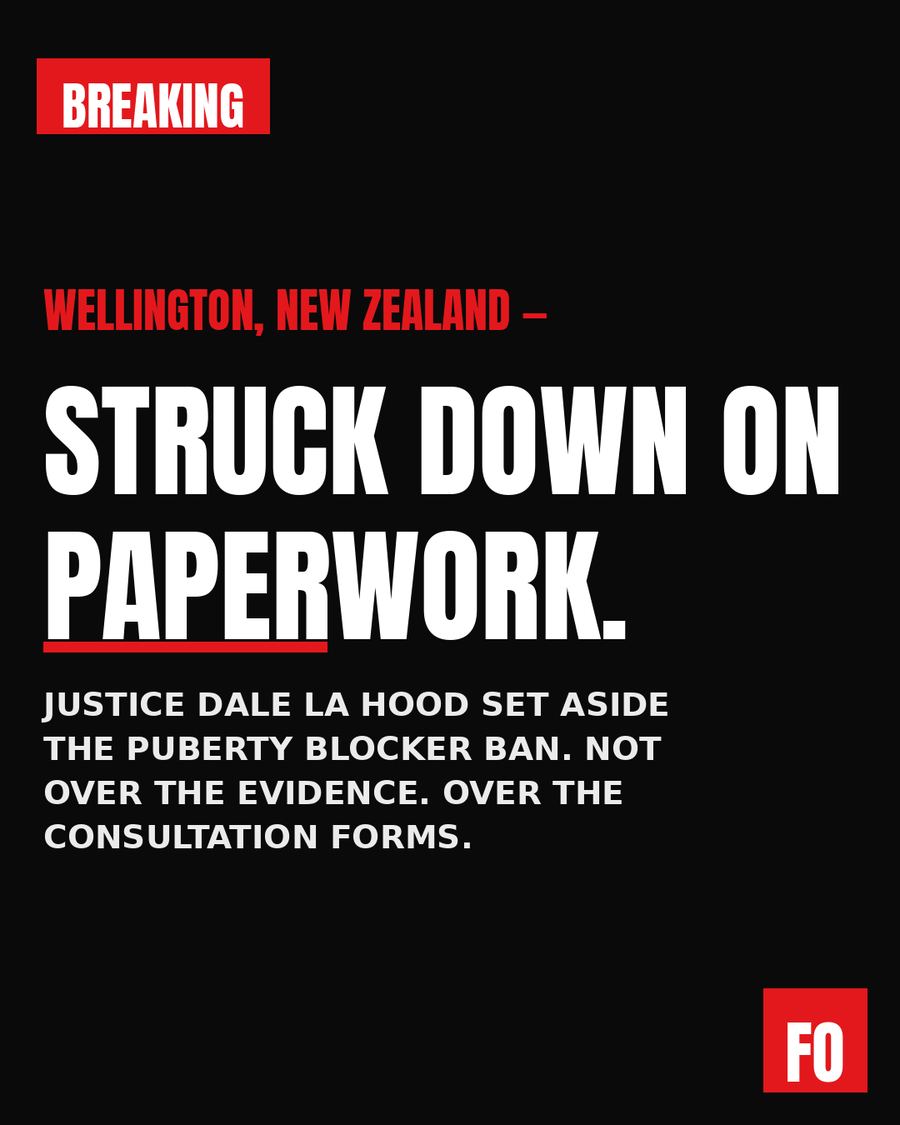
New Zealand's puberty blocker ban went into court a precautionary health measure and came out a paperwork problem.
The High Court has struck down the regulations that barred new prescriptions of puberty blockers for under-18s with gender dysphoria. Justice Dale La Hood ruled the regulations "unlawful and invalid" and set them aside — the ban, in effect, lost on process. The judge found the government had failed to meet its consultation obligations under the Medicines Act: the groups the Ministry of Health approached were never clearly told that an outright prohibition on new prescriptions was under consideration. He also found there was insufficient urgency to justify skipping direct consultation with gender-diverse young people, and ruled that the blanket ban amounted to unjustified discrimination.
Here is the part nobody fought about: the evidence. The government's case for the ban was precautionary — uncertainty over the long-term benefits and risks of puberty blockers, citing overseas bans including Britain's after the Cass Review. But judicial review tests the paperwork, not the science. The ruling resolved none of the clinical questions. It resolved whether the right forms were filled in first. They were not.
Like your satire sourced?
Get the Dispatch — the week's sharpest offenses, with receipts attached.
The Health Minister's office says the government is committed to introducing new safeguards on prescribing and is seeking advice on next steps. Which means the entire controversy — the protests, the press conferences, the judicial review brought by the Professional Association for Transgender Health Aotearoa — has now been reduced to a government shopping for better paperwork. The ban is dead. The evidence question is still waiting in the hallway.
The underlying reporting is filed in the Evidence Locker: Reuters (2026-10-22).