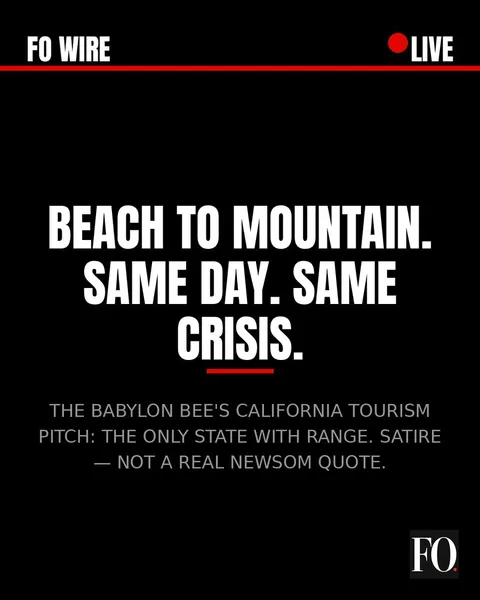
The Babylon Bee just beat California in court, and the ruling contains a phrase that deserves to be framed: "low-brow humor" has equal entitlement to First Amendment protection.
A federal judge struck down the state's anti-deepfake law as applied to satire, holding that the Constitution does not grade jokes on quality before protecting them. The high-brow essay and the cheap meme stand on the same constitutional footing. This is the correct outcome, and it is also very funny — a federal court had to formally establish, on the record, that being unfunny is a protected right.
The case is part of the same wave as the Bee's New Mexico fight: states rushing to regulate AI-generated political content, writing the laws broadly enough to catch parody, and discovering that the First Amendment has opinions about that. The pattern keeps repeating. A legislature passes a content law aimed at deception. The law's text reaches satire. A satire outlet sues. A judge explains, patiently, that parody is speech. The state pays the legal bills.
There is a serious principle under the comedy. Satire has always depended on being taken seriously just long enough to land — the disclaimer, the label, the "this is parody" watermark all defang the form. Courts have understood this for decades: the whole point of a joke is that the audience figures it out. A law that requires the joke to announce itself in advance is not regulating deception; it is regulating humor, which the First Amendment does not permit.
Like your satire sourced?
Get the Dispatch — the week's sharpest offenses, with receipts attached.
The Bee's legal strategy deserves a note, too. The outlet has become arguably the most effective First Amendment litigant in American comedy — not by arguing it is serious journalism, but by insisting, proudly, that it is not. "Low-brow humor" is not an insult in the ruling; it is the holding. The protection does not depend on the joke being good. It depends on it being speech.
So: what is the dumbest joke you would defend in court? The Bee just defended all of them, and won.
Note: this piece is drawn from the post's own account of the ruling; no separate receipts entry was filed for this post at publication time. Claims as stated in the post: federal judge struck down the anti-deepfake law; "low-brow humor" entitled to equal First Amendment protection.
See the reel: https://www.instagram.com/reel/DeFBoJzE3RC/