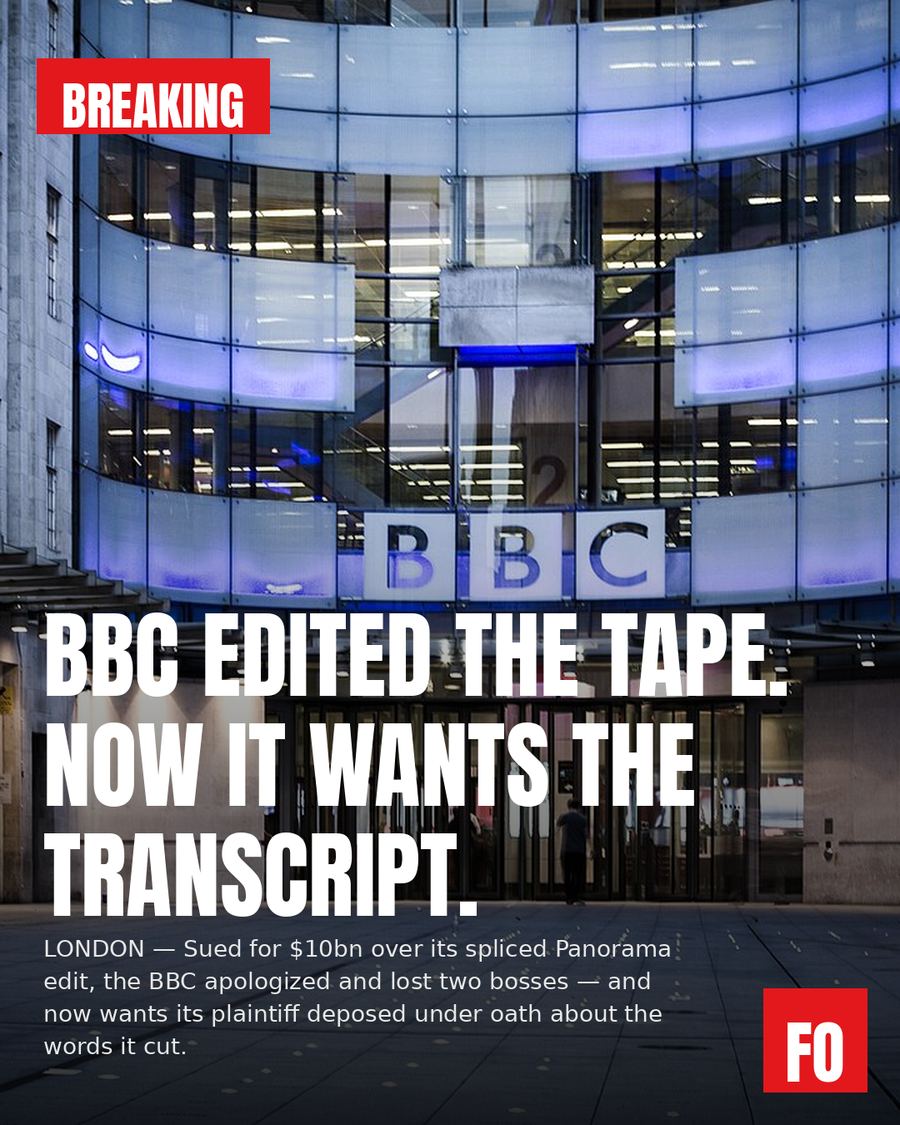
The BBC took a speech, rearranged it, and got sued for $10 billion. Its legal strategy, apparently, is to ask for the speech back — under oath.
In December 2025, Trump sued the BBC over its Panorama documentary "Trump: A Second Chance?," which aired shortly before the 2024 election. The program stitched together separate portions of his January 6, 2021 address: viewers heard "We're going to walk down to the Capitol... and we fight — we fight like hell," when in reality the Capitol-walk remarks and the "fight like hell" line were delivered 54 minutes apart — with a call to protest peacefully left on the cutting-room floor. The BBC apologized for the edit, pulled the program from its platforms, and watched the controversy claim its director-general and its head of news. It denies, however, that the edit amounts to defamation.
Which brings us to discovery. The BBC's lawyers have filed motions to compel Trump's deposition — sworn testimony, under oath, about the very words the network spliced. Trump's team cited "matters of national importance" and said he had no availability before the discovery period closes; the BBC's filings noted those matters included a Georgia campaign rally and a Mar-a-Lago fundraiser. A federal magistrate judge has now threatened sanctions over the delayed deposition, with a hearing set for October 22.
Like your satire sourced?
Get the Dispatch — the week's sharpest offenses, with receipts attached.
Consider the symmetry: a broadcaster that edited a man's words into something he didn't say now needs that man, sworn in, to supply the words for the record. The BBC spent a year insisting the tape was fine. It will spend the next one insisting the transcript matters. Somewhere in London, an editor is learning that the delete key works both ways.
The underlying reporting is filed in the Evidence Locker: Fox News (2026-10-20); TheWrap (2026-10-19).