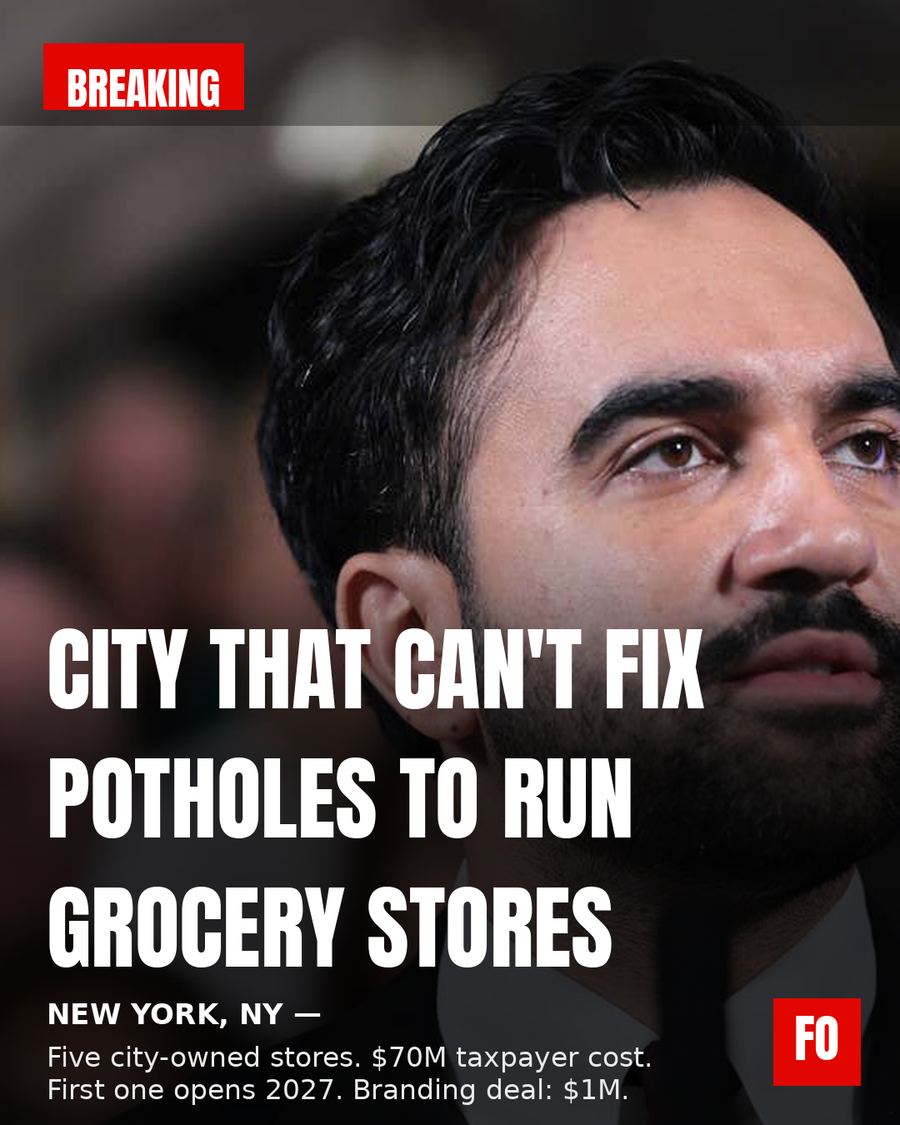
New York City is getting into the grocery business. Mayor Zohran Mamdani's signature affordability promise — five city-owned grocery stores, one per borough — has moved from campaign plank to procurement. Operator bids were due October 16, 2026, with the city set to pick its grocers by spring 2027. The pitch: a rotating basket of produce, meat, dairy, and bread sold at roughly 30% below retail, built with $70 million in taxpayer capital funds.
The timeline is the joke writing itself. Only two of the five sites have even been announced: Hunts Point in the Bronx, expected to open no earlier than late 2027, and East Harlem in Manhattan, slated for 2029. Brooklyn, Queens, and Staten Island are still TBD. The Manhattan location alone carries a $30 million price tag, and industry watchers have openly laughed at the $70 million total as a fantasy figure for building five stores.
But the stores aren't open yet. The branding is. On September 28, the city's Economic Development Corporation awarded a $1 million contract to design firm Gander for the program's branding — a logo for grocery stores that do not exist. One state comptroller candidate's analysis pegged the program's true cost at $206 million in just the first few years.
The stores are carefully engineered not to compete with the bodegas they'd sit next to. They will not sell hot food or prepared meals, no cigarettes, alcohol, or lottery tickets — and no butcher counters. The Harlem site sits within five blocks of 15 existing bodegas and grocery stores, and the neighborhood's grocers are not laughing. The National Supermarket Association and two city grocery operators have filed a federal lawsuit seeking an injunction, calling the taxpayer-subsidized discounts a "slap in the face" to independents who pay full rent and taxes.
Like your satire sourced?
Get the Dispatch — the week's sharpest offenses, with receipts attached.
There is a precedent, and it's instructive. Atlanta's Azalea Fresh Market opened in 2025 with the city acting as a lender — about $8 million in grants and no-interest loans — rather than as builder, landlord, brand manager, and retailer. New York's version is the full vertical stack. City officials are also floating a "library-card-esque" ID system to stop bulk buyers from reselling the discounted goods, which is what happens when your business model is underpriced government cheese.
Context: Mamdani, the democratic socialist who defeated Andrew Cuomo in the 2025 primary and won the general election with 50.4% of the vote, staked his mayoralty on affordability. An Emerson College poll in early October put him at 47% approval, 41% disapproval. The grocery stores are the flagship test of whether the city that runs the buses, the schools, and the potholes can also run the produce aisle. Government cheese is officially back on the menu.
The underlying reporting is filed in the Evidence Locker: AP News via WeSearch (2026-07-27); NY Post (2026-08-22); NewsAnyway (2026-09-29); Grocery Dive (2026-10-05); diningandcooking / NY Post (2026-10-10); Emerson College Polling via NY Post (2026-10-08); RealClearPolling (2025 NYC mayoral results).